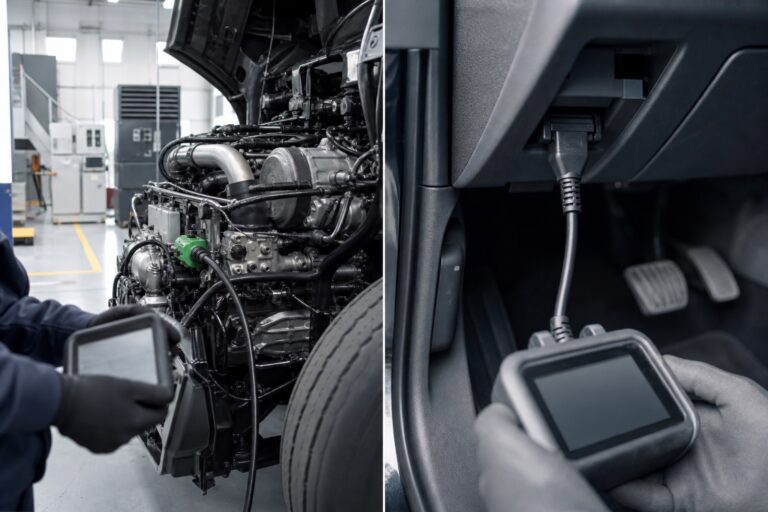
An OBD system can look flawless on paper, pass every bench simulation, and still fail where it counts, on a real production vehicle rolling off the line. Production Vehicle Evaluation, or PVE, is the point where a diagnostic design meets reality, and a miss here does not just generate a to-do item. It forces engineering rework in the form of running changes and, in the worst case, issues found can cause a vehicle recall. Regulators built PVE precisely because a diagnostic strategy that works in theory is worthless if the shipped vehicle cannot report a fault, detect a malfunction, or run its monitors often enough in customer hands.
The California Air Resources Board (CARB) requires PVE as a three-part, in-production check of the OBD system, and it is one of the last technical gates a program must clear. Each stage answers a different question about the vehicle you are actually building, not the prototype you validated months earlier. This article covers what PVE1, PVE2, and PVE3 verify, the In-Use Monitor Performance Ratio (IUMPR) data agencies expect, how Portable Emissions Measurement System (PEMS) testing relates to in-use verification, and where the whole exercise fits inside emission certification.
PVE1: Standardizasyon ve tarama cihazı iletişimi
PVE1, aracın iletişim kurabildiğini doğrular. Before a regulator or a service technician can trust any diagnostic data, the production vehicle has to communicate over the required standardized protocols. PVE1 confirms that the OBD system speaks the expected language and answers a generic scan tool correctly. For light-duty vehicles that means diagnostic communication under SAE J1979-2, the emission-related diagnostic test modes that define how information is requested and reported. For heavy-duty applications, the OBD network most commonly used is SAE J1939. However, some truck manufacturers can choose to also use J1979-2 for heavy-duty applications. PVE1 checks that readiness status, diagnostic trouble codes, freeze-frame data, and that the required parameters are present, correctly formatted, and reachable by a standard tool. If a vehicle cannot answer a generic scan tool in the required way, nothing downstream can be trusted, which is why standardization is the first gate.
PVE2: Monitörlerin gerçekten çalıştığının kanıtlanması
PVE2, monitörlerin görevini yaptığını kanıtlar. A monitor that is declared in the certification paperwork still has to catch any failure it claims occurs on the real vehicle. PVE2 is the monitoring-requirements demonstration: engineers introduce or simulate the malfunctions each monitor is responsible for and confirm that the OBD system detects the fault and illuminates the malfunction indicator lamp (MIL) as required. This stage turns the summary tables, functional descriptions, and flow charts submitted during certification into observable behavior on hardware. It is where a catalyst monitor, an evaporative-system monitor, a misfire monitor, or a sensor-rationality check has to demonstrate that it will alert the driver and store the correct fault information when something genuinely breaks.
PVE3: Kullanım koşullarında monitör performansı
PVE3 measures how the system behaves in the real world. Detecting a fault is only useful if the monitor actually runs during normal customer driving. PVE3 addresses in-use monitoring performance by collecting data from vehicles operating in real-world conditions and evaluating the IUMPR. A monitor that only completes under a narrow, unlikely set of conditions could go a long time without ever checking the component it protects, leaving emissions problems undetected. PVE3 confirms that monitors execute frequently enough across the range of driving that customers really do, which is a very different bar from a controlled demonstration on a dynamometer. This is the stage that ties the OBD system’s paper design back to fleet reality.
IUMPR: Kullanım koşullarındaki performansı belirleyen oran
IUMPR, payın paydaya oranıdır. Kullanımdaki Monitör Performans Oranı (In-Use Monitor Performance Ratio) PVE3'ün merkezindeki ölçüttür ve yapısı anlaşıldığında kurumların aslında neyi aradığı da anlaşılır. IUMPR, OBD sisteminin tuttuğu iki sayaçtan oluşan bir orandır:
- Pay: belirli bir monitörün kaç kez tamamlandığını ve bir arızayı tespit edebildiğini sayar.
- Payda: monitöre çalışması için makul bir fırsat vermiş olması gereken uygun sürüş olaylarının sayısını sayar.
Divide one by the other and you get a performance ratio for each monitor. A healthy ratio means the monitor is running often relative to the driving conditions that should trigger it; a low ratio signals that the monitor is too restrictive in how it enables itself. CARB’s OBD regulations require this data because a monitor that rarely completes provides little real-world protection, no matter how well it performs in a single demonstration. Collecting, tracking, and analyzing IUMPR across an in-use sample is central to passing PVE3.
PEMS ve ilgili kullanım koşulu doğrulamaları
PEMS, doğrulamayı teşhis sisteminden egzoza kadar genişletir. PVE confirms that the OBD system reports and detects correctly, but regulators also care about what the vehicle actually emits in service. A PEMS is an on-vehicle instrument that measures real-world emissions while the vehicle drives its normal duty cycle, rather than on a lab bench. PEMS testing is a common tool in heavy-duty in-use verification and real-driving emissions work, and it complements PVE: where PVE3 asks whether the monitors run often enough, PEMS asks whether the vehicle stays within emission limits during genuine operation. Together they give agencies a picture of both the diagnostic system and the emissions performance of the shipped product, which is why in-use programs increasingly lean on both.
PVE, emisyon sertifikasyonunda nasıl yer alır?
PVE, sertifikasyon başvurusunun üzerine eklenen üretim kontrol noktasıdır. Certification begins long before PVE. Manufacturers file an OBD application with CARB that includes diagnostic summary tables, functional descriptions, flow charts for each monitor, misfire monitor data, demonstration and durability vehicle analysis, and much more, submitted through CARB’s electronic certification filing process. That package describes what the OBD system is designed to do. PVE is the check that the vehicles coming off the production line actually do it. Because CARB’s OBD rules (title 13 CCR 1968.2 for light and medium-duty, 1971.1 for heavy-duty) function as the de-facto benchmark, and because the federal OBD requirement lives at 40 CFR 86.1806, clearing PVE is not optional busywork. It is the evidence that the certified design and the manufactured reality match. Miss it and risk a potential recall campaign to fix the issue on all customer vehicles.
WinterPark'ın yeri
PVE is easier to clear when the OBD team has done it before. WinterPark, OBD Engineering Services and Consulting team, now part of Ascential Care, has spent years on this work across automotive, heavy-duty, agriculture, and motorcycle programs. Based in Michigan and founded in 2006, the roughly 30-engineer team brings more than 250 years of cumulative powertrain-development experience to exactly the checkpoints described above. Their OBD capabilities line up directly with PVE:
- PVE1, PVE2 ve PVE3 kapsamında üretim aracı değerlendirme testi.
- Tarama cihazı iletişim doğrulaması ile J1979-2 / J1939 protokol doğrulaması.
- IUMPR veri toplama ve analizi.
- Monitörlerin arızaları tespit ettiğini ve MIL'i yaktığını doğrulamak için araç tepki testi.
- Gerçek koşullardaki kullanım içi emisyon doğrulaması için PEMS testi.
Bir sonraki OBD programınız üretim değerlendirme kapılarına doğru ilerliyorsa WinterPark, teşhis paketi ve kullanım içi veriler hazır halde oraya ulaşmanıza yardımcı olabilir. Programınızın hangi aşamada olduğunu konuşmak için bize ulaşın.
Sık sorulan sorular
PVE ne anlama gelir?
PVE, Production Vehicle Evaluation (Üretim Aracı Değerlendirmesi) ifadesinin kısaltmasıdır. CARB'ın, bir aracın OBD sisteminin OBD yönetmeliğindeki standardizasyon, monitör ve kullanım içi performans gereksinimlerini karşıladığını üretim aşamasında doğrulayan üç bölümlü doğrulamasıdır.
PVE1, PVE2 ve PVE3 arasındaki fark nedir?
PVE1 standartlaştırılmış tarama cihazı iletişimini doğrular, PVE2 monitörlerin gerekli arızaları tespit ettiğini ve MIL'in yandığını gösterir, PVE3 ise gerçek sürüş koşullarından IUMPR verisi toplar.
IUMPR nedir?
IUMPR, Kullanımdaki Monitör Performans Oranı'dır (In-Use Monitor Performance Ratio). Her OBD monitörünün, çalışmasına imkân vermesi gereken uygun sürüş olaylarına kıyasla ne sıklıkla tamamlandığını gösteren, payın paydaya oranı biçimindeki bir orandır. Monitörlerin normal kullanımda yeterince sık çalıştığını doğrular.
PEMS, PVE ile nasıl ilişkilidir?
PEMS (Portable Emissions Measurement System), araç üzerinde gerçek koşullardaki egzoz emisyonlarını ölçerken PVE, OBD sisteminin kendisini değerlendirir. Kullanım içi doğrulamada birbirlerini tamamlarlar; biri emisyonları, diğeri teşhis sistemini kontrol eder.
PVE'yi hangi yönetmelikler zorunlu kılar?
PVE, CARB'ın OBD yönetmelikleri uyarınca zorunludur (hafif ve orta hizmet tipi araçlar için title 13 CCR 1968.2, ağır hizmet tipi araçlar için 1971.1). Federal OBD gereksinimi 40 CFR 86.1806'da belirlenmiştir.
PVE ağır hizmet tipi araçlar için de geçerli midir?
Evet. CARB'ın HD-OBD yönetmeliğinin kapsadığı ağır hizmet tipi araçlar da üretim aracı değerlendirme gereksinimlerine tabidir.